


Surfing Injuries: Prevention and Safety Tips for Safe Surfing

Key Highlights
Common surfing injuries include cuts, head trauma, shoulder strain, knee damage, surfer’s ear, and skin cancer from UV exposure.
Good prevention starts with matching your surf session to your skill level and reading waves before you paddle out.
Your surfboard, leashes, earplugs, and other surf safety equipment can lower risk in crowded or shallow spots.
Hazards such as reefs, rip current zones, and a hard ocean floor need attention before every session.
Young surfers need close supervision, sun protection, and gradual progress to stay safe and build confidence.
Learning with Blue Mystics Surf School in Santa Teresa can help you build safer habits from day one.
Introduction
Surfing injuries can affect any surfer, from a first-timer to someone chasing bigger waves. Many happen after poor timing, weak surfboard control, or a bad wipeout. The good news is that prevention is often simple. If you understand the main risks and make smart choices, you can stay safer, surf longer, and enjoy each session with more confidence.
Understanding Common Surfing Injuries

Some injuries happen fast. A wipeout in breaking waves can throw you into your surfboard, another surfer, or the ocean floor. Cuts, bruises, rib pain, and head injuries are common when that impact is strong.
Other problems build over time. Surfer’s ear, or exostosis, affects the ear canal after repeated wind and water exposure. Long sessions under harsh sun also raise the risk of skin cancer. Next, let’s look at the injuries surfers see most often.
Most Frequent Surfing Injuries and How They Occur
The most common surfing injuries include lacerations, head trauma, shoulder pain, knee injuries, surfer’s ear, and skin cancer. Many start during a wipeout, especially when the surfboard recoils or the surfer hits the seafloor. Good spacing, better technique, and proper gear help lower risk.
Injury | How It Happens |
Cuts and facial injuries | Contact with surfboard, fins, or seafloor |
Concussion | Impact with board, ocean floor, or another surfer |
Surfer’s ear/exostosis | Repeated wind and water exposure |
Skin cancer | Long UV exposure |
To avoid them, stay within your level, protect your head, use earplugs, and apply sun protection. Learning board control matters just as much as courage.
Recognizing Signs and Symptoms Early
Early signs are often easy to miss. After a hard wipeout or impact with the ocean floor, watch for headache, dizziness, balance trouble, or confusion. These can point to a concussion and should never be brushed off.
Surfer’s ear may start with trapped water, muffled hearing, ear pain, or repeated infections in the ear canal. Skin cancer risk also grows slowly, so persistent sun damage deserves attention.
Prevention improves when you act early. If pain keeps returning, hearing changes, or your head does not feel right after a fall, stop surfing and get checked.
Essential Surfing Safety Tips for All Levels
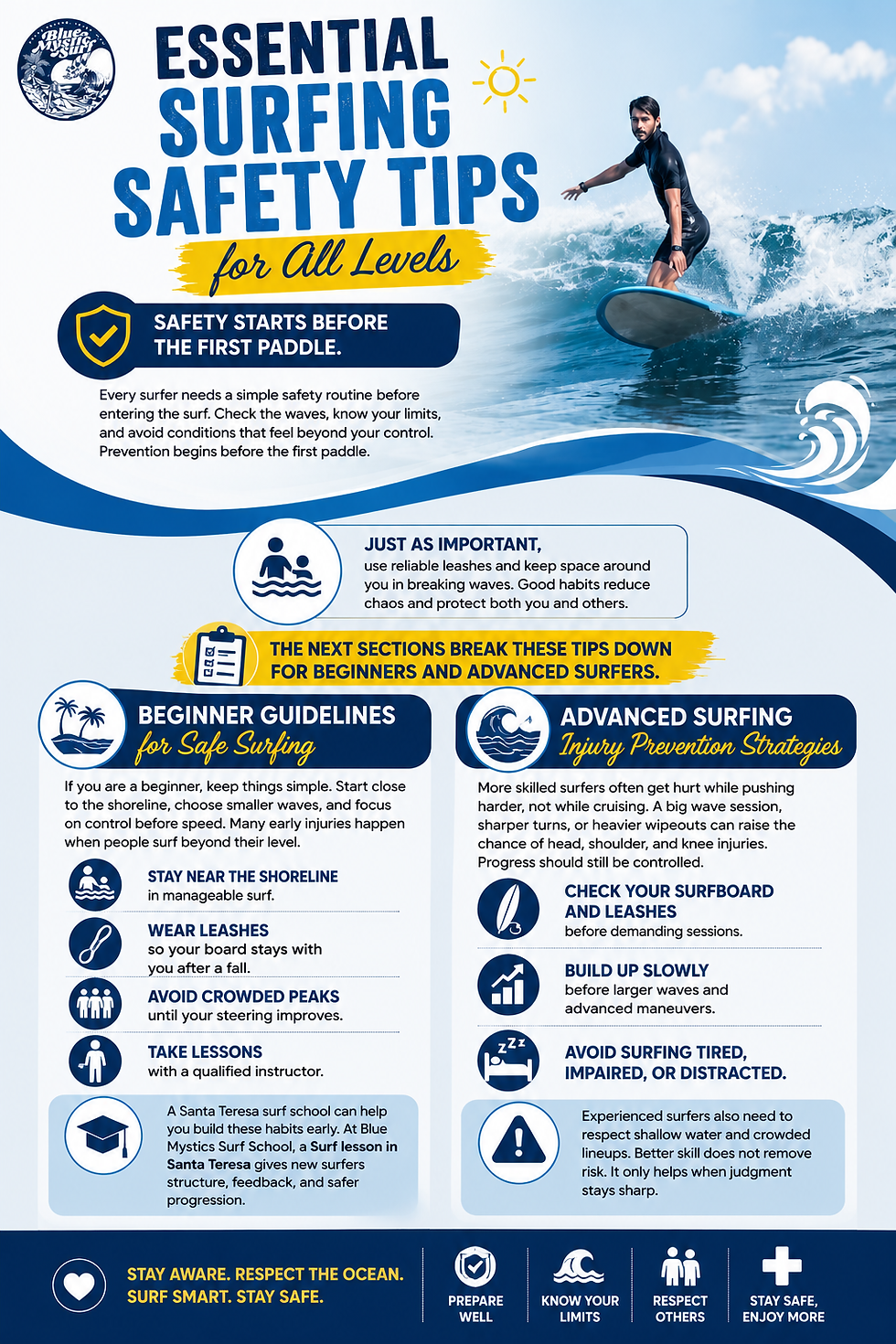
Every surfer needs a simple safety routine before entering the surf. Check the waves, know your limits, and avoid conditions that feel beyond your control. Prevention begins before the first paddle.
Just as important, use reliable leashes and keep space around you in breaking waves. Good habits reduce chaos and protect both you and others. The next sections break these tips down for beginners and advanced surfers.
Beginner Guidelines for Safe Surfing
If you are a beginner, keep things simple. Start close to the shoreline, choose smaller waves, and focus on control before speed. Many early injuries happen when people surf beyond their level.
Use these beginner basics:
Stay near the shoreline in manageable surf.
Wear leashes so your board stays with you after a fall.
Avoid crowded peaks until your steering improves.
Take lessons with a qualified instructor.
A Santa Teresa surf school can help you build these habits early. At Blue Mystics Surf School, a Surf lesson in Santa Teresa gives new surfers structure, feedback, and safer progression.
Advanced Surfing Injury Prevention Strategies
More skilled surfers often get hurt while pushing harder, not while cruising. A big wave session, sharper turns, or heavier wipeouts can raise the chance of head, shoulder, and knee injuries. Progress should still be controlled.
Keep these strategies in mind:
Check your surfboard and leashes before demanding sessions.
Build up slowly before larger waves and advanced maneuvers.
Avoid surfing tired, impaired, or distracted.
Experienced surfers also need to respect shallow water and crowded lineups. Better skill does not remove risk. It only helps when judgment stays sharp.
Identifying Hazards and Ocean Conditions
Before you paddle out, scan the break and identify hazards. A rip current, exposed reefs, debris, or a hard ocean floor can turn a normal session into a rescue situation.
Conditions matter as much as ability. Even strong surfers can misread a changing beach. By studying the water first, you make smarter choices. Let’s review what to look for in the surf and around it.
Assessing Surf and Weather Hazards
Good surf safety starts with observation. Look at wave size, crowd levels, entry points, and any signs of a rip current before you enter. Weather and UV exposure also change how safe a session feels and how long you should stay out.
Check these points first:
Wave size and strength at the main peak
Current movement and possible rip current channels
Weather shifts that reduce comfort or control
Strong UV during long sessions
If the ocean looks too powerful or unclear, wait or choose another spot. Smart surfers do not guess. They assess first, then paddle out with a plan.
Recognizing Dangers Such as Rip Currents and Marine Life
Some dangers are visible if you slow down and watch. A rip current may appear as a channel moving away from the shoreline. Reefs and rocky areas can sit just below the surface and become dangerous during a fall.
Look for these warning signs:
Water pulling steadily away from the shoreline
Shallow reefs near takeoff or inside sections
Marine life activity in the area
Crowded entry and exit zones
Knowing these patterns helps you choose safer places to paddle out. It also helps you decide when a session is not worth the risk.
Key Surfing Safety Equipment You Should Have
Safety equipment does not replace skill, but it can reduce injury risk. Your surfboard setup, leashes, and earplugs all play an important role during regular sessions and wipeouts.
The right gear also helps with longer-term issues such as ear problems and repeated impact. In the next sections, we’ll cover the basic items every surfer should consider and a few useful upgrades for extra protection.
Basic Gear to Prevent Surfing Injuries
Every surfer should have a few basic items that lower common risks. Good gear protects you from impact, cold, and repeated exposure. It also makes your sessions more controlled.
Start with these essentials:
Leashes to keep your board close after a fall
Earplugs to help prevent surfer’s ear
Wetsuit for warmth and added surface protection
Helmet for head protection, especially in risky conditions
Many surfers ignore simple gear because of image, not logic. That is a mistake. Real prevention often starts with using equipment consistently, not just owning it.
Upgrading Safety Accessories for Greater Protection
Once you cover the basics, a few upgrades can add more protection. Blue Mystics Surf School recommends choosing safety equipment based on your break, experience, and session length rather than trends.
Helpful upgrades include:
A quality helmet for heavier surf or shallow areas
UV-protective clothing for long exposure
A wetsuit when cold water raises comfort and safety concerns
At Blue Mystics Surf School, gear choices are tied to real conditions in Santa Teresa. That practical approach helps surfers stay comfortable, alert, and better protected in the water.
Surf Etiquette and Rules Every Surfer Must Follow
Safety in surf is not only about the ocean. It is also about how you act around other people. Good etiquette lowers collisions, tension, and poor decisions.
When surfers respect space and control their surfboard, prevention becomes much easier. Crowded lineups demand patience and awareness. The following sections explain how to stay safer around others and when surfing without support.
Keeping Yourself and Others Safe in Crowded Lineups
A crowded lineup increases the chance of cuts, board strikes, and confusion. Basic surf etiquette helps everyone move more safely and predictably. If you cannot control your board, you should not sit in the busiest part of the peak.
Follow these rules:
Keep a safe distance between your surfboard and others
Do not paddle into tight takeoff zones without control
Avoid crowded breaks when you are still learning
Stay alert during every set
Respect in the lineup is a form of prevention. It reduces panic, bad positioning, and sudden collisions that lead to injury.
Surfing alone removes an important layer of support. If you are a beginner, that gap is even bigger because wave judgment and surfboard control are still developing. Group lessons offer guidance, structure, and faster correction of mistakes.
Key safety differences include:
Lessons provide instructor oversight and prevention support
Group settings help beginners choose suitable conditions
Solo sessions leave you to manage errors alone
For many new surfers, a Santa teresa surf school is the safest place to begin. Blue Mystics Surf School helps students build habits that transfer well to independent sessions later.
Injury Prevention for Young Surfers and Beginners
Young surfers and beginners face added risk because their judgment, balance, and technique are still developing. Children and youth also appear to have higher concussion rates than adults.
That does not mean they should avoid surfing. It means prevention must be more structured. With supervision, gradual progress, and the right protection, beginners of all ages can learn safely. Here are the key points families should know.
Special Considerations for Children and Teens
Children and teens need closer supervision in the water. Their skills often improve quickly, but confidence can rise faster than judgment. That is why prevention should stay simple and consistent.
Focus on these priorities:
Match wave size to age and ability
Use steady sun protection during every session
Progress slowly into harder conditions
Young surfers also need support after any hard fall or head impact. If a child seems dizzy, confused, or unusually tired, stop the session and get medical guidance before returning.
How Blue Mystics Surf School Ensures Surfing Safety
Blue Mystics Surf School builds safety into the learning process. For every beginner, the goal is not just standing up. It is building awareness, control, and respect for the ocean from the start.
Their approach includes:
Instructor guidance matched to skill level
Clear prevention habits before entering the water
Attention to suitable safety equipment for each session
If you book a Surf lesson Santa Teresa experience with Blue Mystics Surf School, you get more than technique coaching. You learn safer decision-making that supports long-term progress in Santa Teresa.
What To Do If an Injury Happens or You’re in Trouble
Even with strong prevention, things can still go wrong in the surf. A bad wipeout, collision, or rip current can create a fast-moving emergency.
Your response matters. Staying calm gives you a better chance of making good choices and getting help. The next sections explain what to do after an accident and how to escape a dangerous current safely.
Handling Surfing Accidents Calmly
A calm response can prevent a bad situation from getting worse. After a wipeout or collision, first check for head pain, confusion, bleeding, or trouble moving. Impacts with the ocean floor or board can cause serious injury.
If something goes wrong:
Stop surfing right away
Signal for rescue help if needed
Avoid returning until symptoms are assessed
Panic burns energy and clouds judgment. Whether the problem is a hard fall or a current pulling you away, staying steady gives you the best chance to protect yourself.
Steps for Escaping Rip Currents Safely
If you get caught in a rip current, do not fight it by swimming straight toward the shoreline. That usually causes exhaustion. The safest move is to stay calm and work with the water until you are free.
Follow these steps:
Stay calm and do not panic
Swim parallel to the shoreline
Once free, angle back toward shore
If needed, float, tread water, and signal for help
This advice matters for surfers and swimmers alike. If you feel pulled outward or pushed underwater repeatedly, conserve energy and focus on escape, not speed.
Conclusion
In conclusion, understanding surfing injuries and implementing effective prevention strategies is crucial for every surfer, whether you're a beginner or an advanced rider. By recognizing common injuries, assessing ocean conditions, and following safety guidelines, you can significantly reduce your risk while enjoying the waves.
At Blue Mystics Surf School, we prioritize safety in all our surf lessons in Santa Teresa, Costa Rica, ensuring that you not only learn to surf but do so with the highest standards of safety. Remember, a safe surfing experience leads to more enjoyable days on the water. If you're ready to enhance your skills while prioritizing safety, join us for our group or private surf lessons today!
Frequently Asked Questions
What are the most important surfing safety tips for beginners?
A beginner should stay near the shoreline, choose smaller surf, and keep strong control of the surfboard. Use leashes, avoid crowded peaks, and learn with an instructor when possible. These steps reduce common early mistakes and lower injury risk.
How can I prevent injuries while surfing in Santa Teresa, Costa Rica?
In Santa Teresa, injury prevention starts with reading conditions, respecting your level, and watching for reef or shallow sections. Keep control of your surfboard, avoid crowded spots, and learn local safety habits through a trusted Santa teresa surf school.
What safety equipment does Blue Mystics Surf School recommend?
Blue Mystics Surf School recommends practical safety equipment based on conditions and ability. Core items include leashes, and in higher-risk sessions a helmet can add protection. A wetsuit helps in colder water, while other gear supports comfort and safer learning.
Is surfing a high risk activity?
Surf carries real risk, but many injury problems can be reduced with prevention. Risk rises in larger waves, crowded breaks, shallow water, and when surfers go beyond their skill level. Smart choices make a big difference.
What is the biggest danger in surfing?
One major danger in surf is a powerful rip current, especially when panic sets in. Hard impacts with the ocean floor, heavy breaking waves, and long time underwater also create serious risk during wipeouts or shallow-water falls.
How can I prevent injuries while surfing?
To prevent surf injury, choose conditions that match your skill, keep control of your surfboard, and wear reliable leashes. Add sun and ear protection, avoid crowded breaks when learning, and stop if you feel pain or confusion after impact.
How do I identify potential hazards before entering the surf?
Check the surf before paddling out. Look for reefs, shallow ocean floor sections, current movement, crowd levels, and changing weather. If the break looks too strong or unclear, wait, move spots, or ask a local instructor for guidance.
What safety equipment should every surfer have?
Basic safety equipment should include good leashes, earplugs, and a surfboard suited to your level. A wetsuit adds warmth and some protection in colder conditions. In higher-risk sessions, extra items such as helmets can also be useful.
What are the basic surfing rules to keep everyone safe in the water?
Basic surf etiquette means keeping distance, controlling your surfboard, and avoiding crowded takeoff zones if your skills are limited. Safety and prevention improve when surfers stay aware, respect space, and make predictable choices in the lineup.
Are there specific surfing safety tips for children or young beginners?
Yes. Children and each young beginner need close supervision, smaller waves, and simple prevention rules. Strong sun protection matters every session. They should use a suitable surfboard, progress slowly, and stop right away after any hard head impact.





Comments